

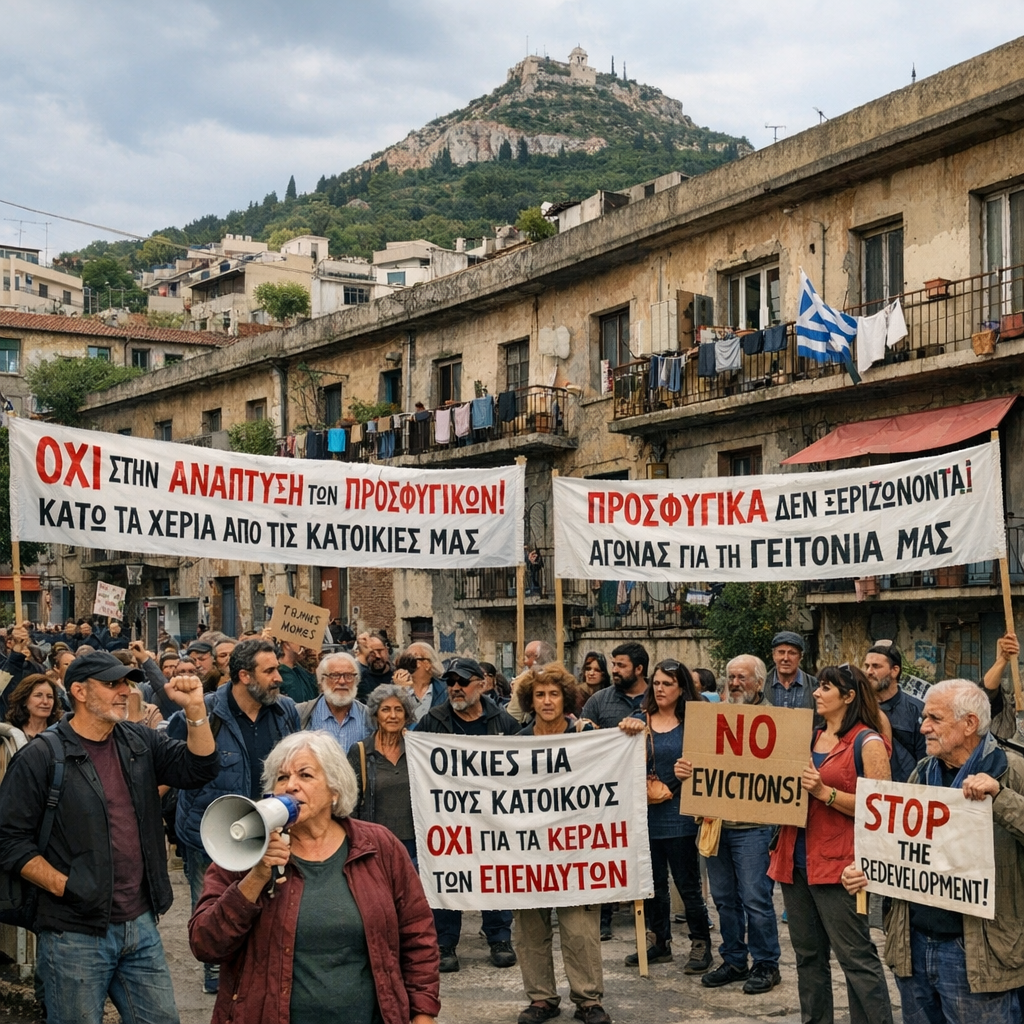
The Prosfygika housing complex on Alexandras Avenue, a historic site in Athens, is at the center of a contentious redevelopment plan that has ignited significant community unrest. Built in the 1930s to accommodate refugees, Prosfygika has become a symbol of resilience and community solidarity. However, recent initiatives to renovate the area have raised concerns among residents and activists about potential evictions and the loss of cultural heritage.
Community Mobilization and Hunger Strikes
In response to the proposed redevelopment, members of the Prosfygika community have organized protests and demonstrations to voice their opposition. Notably, activist Aristotelis Chantzis embarked on a prolonged hunger strike, reaching 139 days, to draw attention to the community’s plight. Supporters have rallied in central Athens, emphasizing the urgent need for dialogue between authorities and residents to address the future of Prosfygika.
Historical Significance and Cultural Heritage
Prosfygika’s architectural and historical value is widely recognized. The complex stands as a testament to Athens’ refugee history and the city’s evolving urban landscape. Preservation advocates argue that any redevelopment should respect and incorporate the site’s heritage, ensuring that the community’s character is maintained.
Calls for Inclusive Redevelopment
Residents and activists are calling for a redevelopment approach that prioritizes the needs and rights of current inhabitants. They advocate for transparent planning processes that involve community input, aiming to balance modernization efforts with the preservation of Prosfygika’s unique identity.
As discussions continue, the future of Prosfygika remains uncertain. The situation underscores the broader challenges Athens faces in balancing urban development with cultural preservation and social equity.