

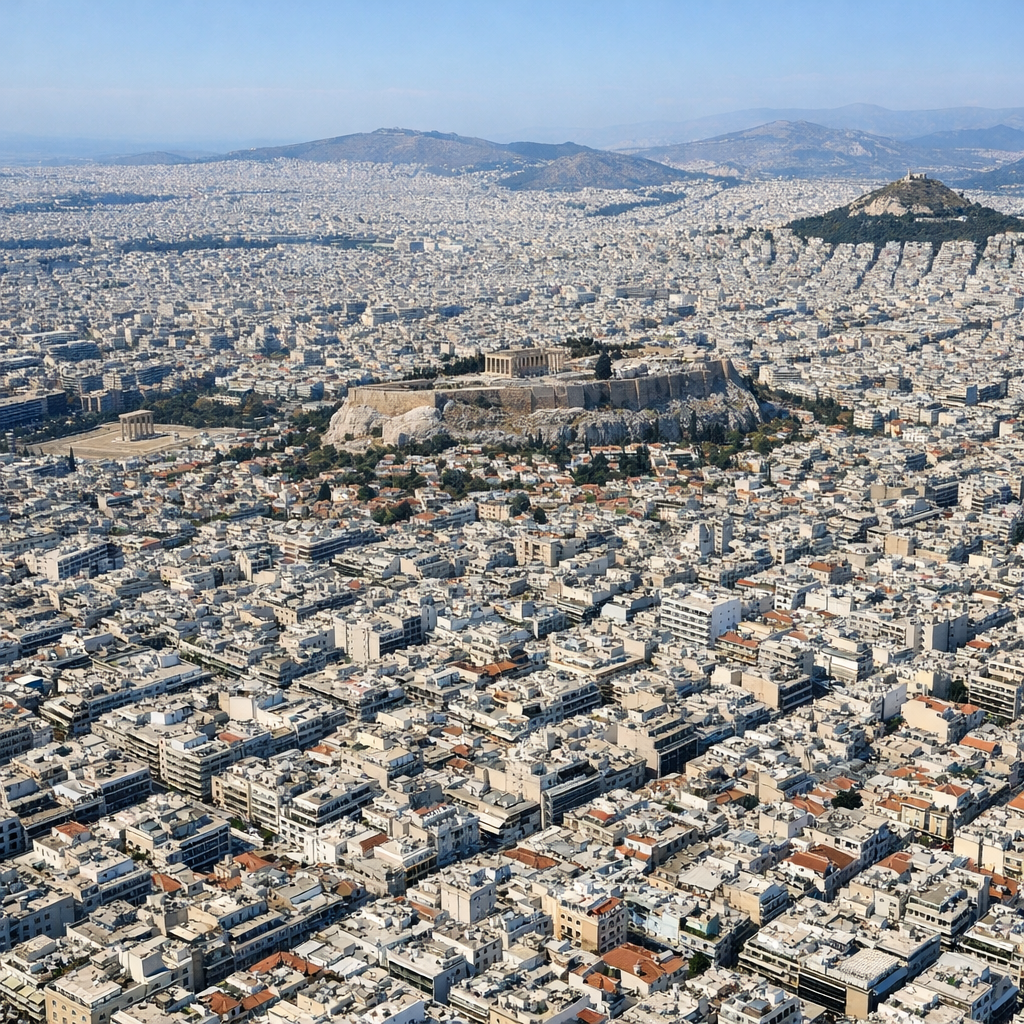
Athens, like many metropolitan areas worldwide, experiences the Urban Heat Island (UHI) effect, where urban regions register higher temperatures than their rural surroundings. This phenomenon arises from factors such as dense infrastructure, limited vegetation, and human activities.
Causes of the Urban Heat Island Effect
Several elements contribute to the UHI effect in Athens:
- Urban Materials: Surfaces like asphalt and concrete absorb and retain heat, leading to elevated temperatures.
- Reduced Vegetation: Limited green spaces decrease natural cooling through evapotranspiration.
- Anthropogenic Heat: Energy consumption from vehicles, industries, and buildings releases additional heat into the environment.
Impacts on the City
The UHI effect has multiple repercussions for Athens:
- Health Risks: Increased temperatures can exacerbate heat-related illnesses, particularly among vulnerable populations.
- Energy Consumption: Higher temperatures lead to increased use of air conditioning, raising energy demand and costs.
- Environmental Stress: Elevated temperatures can strain local ecosystems and water resources.
Mitigation Strategies
To address the UHI effect, Athens can consider several approaches:
- Enhancing Green Spaces: Expanding parks and urban forests can provide cooling through shade and evapotranspiration.
- Cool Roofs and Pavements: Utilizing reflective materials can reduce heat absorption.
- Urban Planning: Designing buildings and streets to improve airflow can help dissipate heat.
By understanding and addressing the factors contributing to the UHI effect, Athens can work towards creating a more comfortable and sustainable urban environment.